The design of seamless clip ins makes them inherently more invisible than traditional weft extensions, but achieving a truly undetectable result still depends on how carefully they are applied. Follow this step-by-step technique and your extensions will be completely indistinguishable from your natural hair.  

Preparation: Getting Your Hair Ready

 Start with clean, completely dry hair. Extensions grip better and blend more naturally on hair that is free of styling product buildup. If you have used a dry shampoo or heavy serum, wash your hair and allow it to dry fully before application. Slightly rough-dried hair — with a little texture rather than being pin-straight — grips the clips more securely and helps the extensions blend at the attachment point.  

Sectioning: The Foundation of an Invisible Install

 Proper sectioning is the single most important technique for an undetectable seamless clip-in result. Begin by combing your hair back with a tail comb and creating a clean horizontal parting approximately two inches above the nape of your neck. Use sectioning clips to hold the hair above this parting completely out of the way.  The parting should be neat and straight, not zigzagged or diagonal. A clean, horizontal section ensures the extension weft aligns perfectly with the natural hair when it falls back over the top. An uneven parting creates gaps and misalignment that are difficult to correct after the clips are attached.  

Attaching the First Weft

 Take your widest seamless weft and open all the clips. Hold the weft flat against the hair in the partying, with the polyurethane base sitting flush against your scalp. Close the centre clip first, then the clips on either side, working outward from the middle. This sequence prevents the weft from shifting sideways during attachment and ensures even, symmetrical placement.  Once attached, release the hair above the parting and let it fall over the weft. Run your fingers gently through the join area to ensure the base is completely hidden and the blend is smooth.  

Building the Install: Working Upward

 Create your next parting approximately one to one and a half inches above the first and repeat the process with progressively narrower wefts. Use three-clip or four-clip medium wefts in the middle sections of the head, and one or two-clip smaller wefts near the temples and sides where natural hair is typically finer and the risk of detection is greater.  

Finishing: Blending to Perfection

Once all wefts are attached, use a gentle loop brush to comb through from roots to ends. This merges the extension hair with your natural strands. For the most invisible result, lightly run a flat iron at a low temperature over the attachment area — the heat helps the natural hair and extension base meld together visually, creating a completely continuous surface.  Finish with a light mist of flexible hold spray and you will have a result that genuinely cannot be distinguished from your natural hair — even up close.

Few garments transition between contexts as seamlessly as a well-chosen zip up hoodie. Whether you are heading from the gym to a coffee shop, from a morning run to an afternoon errand, or from a casual workday to an evening out with friends, the zip up hoodie has the adaptability to serve you well in each scenario — provided you know how to style it appropriately.

The Gym Look

In athletic settings, functionality takes precedence over fashion, but that does not mean aesthetics need to be abandoned. A lightweight 300gsm zip up hoodie over performance shorts or fitted track pants creates a clean, athletic silhouette that works both in the gym and immediately after. Wear it fully zipped during warm-up and cool-down periods, then open it up during active sets. For footwear, classic athletic trainers in a clean colorway keep the look cohesive and sport-appropriate.

The Street Casual Look

For casual street wear, the zip up hoodie really opens up in terms of styling possibilities. Try it half-unzipped over a graphic tee, paired with dark straight-leg denim and chunky sneakers. Or wear it fully unzipped as a lightweight jacket layer over a simple long-sleeve tee, with cargo trousers and clean mid-top boots. The key is to let whatever is underneath the hoodie contribute to the overall look rather than hiding it completely under a fully closed zip.

The Smart Casual Approach

A premium heavyweight zip up hoodie in a solid, deep tone — charcoal, navy, forest green — can absolutely work in smart casual contexts. Layer it over a clean white button-down shirt, leaving the collar of the shirt visible above the hoodie's neckline. Pair with tailored trousers and leather sneakers or clean Derby shoes. This combination feels intentionally fashion-aware and suggests a person who understands the rules well enough to subvert them thoughtfully.

The Layering Scenarios

The zip up hoodie's greatest strength is its ability to be layered beneath outerwear. Under a puffer jacket, it provides excellent warmth while maintaining a clean profile. Beneath a trench coat, it creates a street-fashion-influenced layer that reads as deliberately styled. Under a technical shell or field jacket, it contributes to an outdoor-lifestyle aesthetic that is both functional and visually compelling.When layering, pay attention to the bulk ratio between the hoodie and the outerwear. A heavyweight 500gsm zip up under a slim-cut jacket will create uncomfortable bulk — in this case, opt for a lighter hoodie or a more generous-cut outer layer. A medium-weight 320gsm zip up under a relaxed-fit overcoat, on the other hand, creates a beautifully proportioned layered look without excess volume.

Color Strategy

Neutrals — black, grey, navy, oatmeal — offer the maximum styling flexibility and pair well with virtually any other color in your wardrobe. If you want just one zip up hoodie in your rotation, make it a neutral. If you want to build a collection, layer in more distinctive colors and washed finishes once the foundational neutral is covered. Acid wash and vintage wash zip ups offer a visual complexity that neutrally toned solid pieces cannot replicate.

Example Text

The disc harrow is one of the most versatile and widely used tillage implements in modern agriculture, capable of performing functions that range from light seedbed refinement to aggressive stubble incorporation and cover crop termination. Understanding what a disc harrow does — and what it does exceptionally well — helps farmers integrate this implement into their tillage programmes in a way that maximises its contribution to field preparation efficiency and crop establishment quality.      

At its core, a disc harrow works by rotating gangs of concave steel discs through the soil at an angle to the direction of travel. This action cuts through surface residues, soil aggregates, and weed vegetation while simultaneously turning and mixing the disturbed material back into the soil profile. The degree of soil disturbance is controlled by adjusting the gang angle — a shallower angle produces gentle mixing with minimal throw, while a steeper angle delivers more aggressive cutting and greater soil movement. This adjustability makes the disc harrow useful across a remarkably wide range of tasks and conditions.      

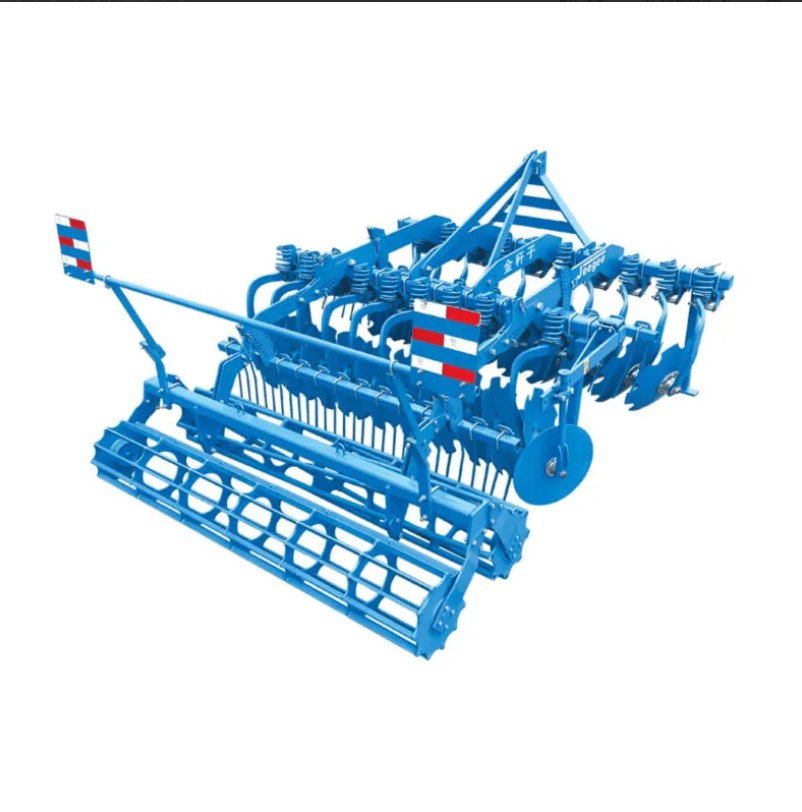
1BYQK Full Hanging Stubble Elimination Notched Disc Harrow — JEEGEE Group  |  View Full Product Range


Stubble management after cereal harvest is one of the disc harrow's most important applications. Crop residues left on the soil surface after harvest need to be incorporated into the soil to prevent them from harbouring diseases and pests, interfering with subsequent field operations, and creating an uneven, difficult seedbed for the following crop. A disc harrow run shortly after harvest chops and incorporates these residues efficiently, initiating the decomposition process while simultaneously creating a cultivated surface layer that retains moisture and supports beneficial soil organisms.      

Cover crop termination is another area where disc harrows excel. As sustainable farming practices increasingly incorporate cover crops into rotation planning, the need to terminate and incorporate these crops before the main crop planting date becomes a routine field operation. A disc harrow set to a moderate gang angle can terminate most cover crop species effectively while incorporating the biomass into the soil profile, accelerating decomposition and releasing nutrients for the following crop.      

JEEGEE Group's disc harrow range, including the 1BYQK full hanging stubble elimination notched disc harrow, represents the current state of the art in disc harrow engineering. Notched disc edges provide superior cutting of tough residues compared to plain disc designs, while the full suspension mounting system delivers consistent working depth across undulating terrain. For any farm operation that needs reliable, efficient, and versatile secondary tillage capability, a quality disc harrow is an investment that delivers returns from the very first season of use.

One of the most consequential decisions in industrial piping system design is the selection of appropriate piping valves types for each service point in the network. An incorrectly specified valve — even a high-quality one — will fail to perform its intended function, wear prematurely, or introduce unacceptable pressure drops that undermine the system's hydraulic performance. A structured selection methodology that considers fluid type, flow function, pressure class, temperature, and material compatibility is the only reliable path to correct valve specification.

Step 1: Define the Flow Function

Every valve in a piping system performs one of three fundamental functions: isolation (stopping flow completely), regulation (controlling flow rate continuously), or prevention (stopping reverse flow automatically). Isolation requires tight shut-off — gate, ball, or plug valve. Regulation requires a valve whose flow coefficient (Cv) changes predictably with stem position — globe, needle, or control butterfly valve. Prevention requires a self-acting check mechanism — swing check, dual-plate check, or lift check valve. Mixing these functions — specifying a gate valve for regulation, for example — leads to poor performance and rapid mechanical degradation.

Step 2: Define Pressure Class and Temperature

ANSI/ASME B16.34 defines the pressure-temperature ratings for valve body materials across standard pressure classes from Class 150 to Class 4500. A valve specified at Class 300 in carbon steel (rated to approximately 51 bar at ambient temperature) carries a different allowable pressure at 300°C — a reduction that must be accounted for in the design. Stainless steel valve bodies in 316 grade provide superior corrosion resistance but must be rated against the specific chemical service fluid, particularly at elevated temperatures where chloride stress corrosion cracking can occur in austenitic grades.

End Connection MatchingAlways match the valve end connection to the piping system — flanged (RF, RTJ, FF), butt-weld, socket-weld, or threaded. Mismatched connections create assembly complications and potential leak paths that undermine system integrity.

Step 3: Select Body Material for the Fluid

The valve body material must be compatible with the process fluid across the full operating temperature range. Carbon steel is the standard for hydrocarbons, steam, and general utilities. 316 stainless steel handles most aqueous corrosive media, organic acids, and pharmaceutical process streams. Duplex stainless and super-austenitic grades are selected for high-chloride or highly oxidising environments. For cryogenic service, austenitic stainless steel or 9% nickel alloy bodies are specified for their retention of ductility and toughness at temperatures below -100°C.

Step 4: Consider Actuation Requirements

Large valves or those in remote, hazardous, or automated plant locations require actuators — pneumatic, hydraulic, or electric — to provide the operating torque and integrate with the plant distributed control system. Quarter-turn valves (ball, butterfly, plug) are the most actuator-friendly designs, with direct-mount actuator interfaces standardised under ISO 5211. Multi-turn valves (gate, globe) require gearbox-and-actuator combinations for larger sizes. Correct actuator sizing — accounting for differential pressure, stem packing friction, and flow dynamic forces — is essential for reliable automated valve performance.


A business desktop pc continues to be a preferred technology solution for organizations that require dependable computing performance and efficient office operations. Despite the growing popularity of mobile devices and laptops, desktop computers remain highly valuable in professional environments because they provide stability, scalability, and strong multitasking capabilities. Modern businesses rely on these systems to support communication, productivity software, customer management, and digital collaboration throughout daily operations.

One of the biggest advantages of business desktop systems is their consistent performance. Employees often run several applications at the same time, including spreadsheets, accounting software, online communication tools, and cloud-based business platforms. Desktop computers are designed to handle these workloads efficiently while maintaining fast response times and stable system performance. Reliable computing helps employees work more productively and reduces interruptions caused by slow or unstable hardware.

Modern office environments also prioritize organization and efficient workspace management. Many business desktop systems now feature compact and streamlined designs that reduce clutter and improve workstation appearance. Organized office layouts help employees remain focused while creating a more professional environment for clients and visitors. Cleaner workspaces can also improve comfort and overall workplace satisfaction.

Another major benefit of desktop computers is durability. Business desktop PCs are typically designed for continuous use and long-term reliability, making them suitable for demanding office environments. Organizations appreciate systems that provide stable performance over extended periods while requiring minimal maintenance. Reliable hardware helps reduce downtime and supports smoother business operations.

Energy efficiency is becoming increasingly important for companies looking to manage operating expenses more effectively. Modern business desktop systems are optimized to consume less electricity while still supporting demanding workloads. Lower energy consumption helps organizations reduce costs and minimize environmental impact. Improved cooling systems also reduce heat generation and operating noise, contributing to a more comfortable workplace atmosphere.

Desktop systems also offer strong upgrade potential. Businesses often prefer hardware that can evolve with changing operational requirements. Desktop computers allow organizations to upgrade memory, storage, and other components when necessary, helping extend the lifespan of technology investments. This flexibility makes desktop systems a cost-effective long-term solution for many companies.

Advanced connectivity options further improve workplace productivity. Modern business desktops support multiple monitors, wireless accessories, printers, and network devices, allowing employees to create highly efficient workstation setups. These features help businesses improve collaboration and support multitasking across different departments and industries.

Technology manufacturers continue developing desktop solutions that meet the evolving needs of modern organizations. Faster processors, SSD technology, and improved system designs have made today’s business desktop PCs more powerful and versatile than ever before. Businesses can now enjoy strong computing performance while maintaining clean and efficient office environments.

As companies continue adapting to digital business operations and hybrid work models, business desktop PCs are expected to remain essential workplace tools. Their balance of reliability, scalability, efficiency, and performance makes them an excellent investment for organizations seeking dependable long-term computing solutions.

Strategic thinking often seems like a skill reserved for leaders, planners, or visionaries. But strategic thinking begins with something much simpler: noticing patterns in everyday situations and choosing actions with long-term outcomes in mind.
Take the moment you enter a coffee shop and pick a line. That decision isn’t random. You observe pace, behavior, timing, and the “flow” of the environment. That is strategy in its simplest form — gathering information, predicting outcomes, and selecting the path that best serves your objective.


Strategic thinkers view even small choices as part of a broader system. They don’t react blindly; they pause, observe, and choose intentionally. The coffee-shop example reinforces the idea that strategy isn’t complicated — it’s about deliberate awareness.
Another part of strategic thinking is flexibility. You may choose a line and then notice it slowing down. Adjusting quickly — without frustration — reflects the adaptability essential to good strategy.
Over time, practicing strategic thinking in small decisions helps you apply it naturally to bigger ones. You think more clearly, anticipate better, and navigate life with a sense of direction that feels both confident and calm.

I BUILT MY SITE FOR FREE USING