The aftermarket for thermo king reefer parts offers significant cost advantages over OEM-direct procurement without compromising the technical quality that transport refrigeration systems demand — but only when sourced from suppliers who meet the technical and quality standards that the application requires. Evaluating aftermarket reefer parts suppliers demands a structured assessment process that looks beyond price to the dimensions of quality, specification compliance, technical support, and supply reliability that determine whether a supplier relationship will deliver value or risk over the long term.
Technical Specification Compliance: The Non-Negotiable Baseline
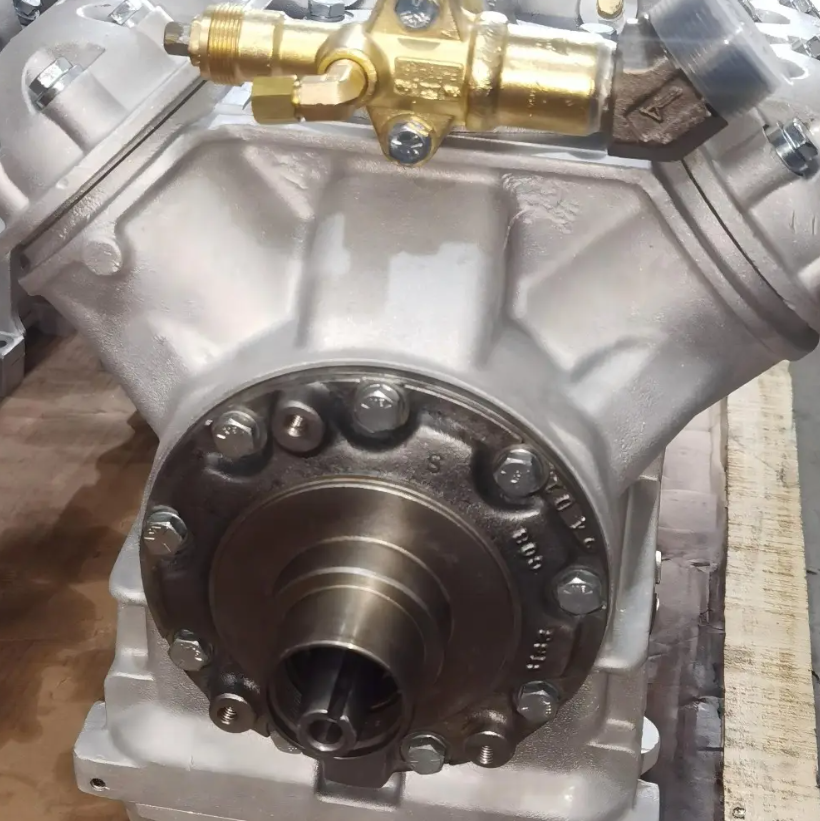
The first and most fundamental criterion for any thermo king reefer parts supplier is the ability to demonstrate, through verifiable documentation, that their products meet the original equipment manufacturer's dimensional, material, and performance specifications. For critical components — compressors, expansion valves, and filter-driers — this means providing formal technical data sheets that specify dimensional tolerances, material grades, rated performance parameters, and test conditions. For compressors, this means providing volumetric efficiency data at the specific operating conditions of the Thermo King system being serviced. For expansion valves, it means providing capacity and superheat opening data at the design refrigerant and at the rated pressures and temperatures of the specific unit model. Suppliers who cannot provide this technical documentation cannot reliably guarantee that their products will perform to specification in the application.
Quality Management System Certification
A supplier operating under a certified quality management system — ISO 9001 or the more demanding automotive-grade IATF 16949 (formerly TS16949) — has implemented documented procedures for incoming material inspection, production process control, finished goods inspection, and non-conforming product management. These procedures, when properly implemented and audited, provide systematic assurance that every production batch meets the specified quality requirements. The certification itself does not guarantee product quality — it guarantees a process framework that, when functioning as designed, consistently produces compliant products. Requesting copies of the supplier's current quality certification and verifying their validity through the issuing body's online verification system provides a baseline level of assurance that a supplier without certification cannot offer.
Stock Availability and Lead Time Reliability
A reefer parts supplier whose products are consistently in stock and available for immediate dispatch provides operational insurance against the delays that make in-service compressor or valve failures extremely costly. Evaluate potential suppliers on their stock depth — the number of units of each critical part normally held in inventory — and their fill rate record — the percentage of orders shipped complete from stock without back-order. A fill rate below 95 percent for standard catalogue items indicates a supplier whose stock management is inadequate for the demands of active fleet maintenance operations. In the transport refrigeration environment, where a failed compressor waiting for a parts delivery can hold a vehicle off the road for multiple days, supply chain reliability is a commercial criterion as important as product quality.
After-Sales Technical Support
The most valuable service a thermo king reefer parts supplier can provide beyond the product itself is responsive technical support that helps maintenance technicians and fleet managers solve application problems quickly. This means having engineers who understand the specific unit models in common use and can confirm compatibility between part numbers and vehicle configurations, advise on installation best practices, and troubleshoot performance issues that may relate to parts specification or installation errors. Suppliers who offer this support capability — through dedicated technical hotlines, online documentation resources, and engineering-qualified sales staff — convert a transactional parts-supply relationship into a genuine operational partnership that reduces the total time and cost of maintenance work across the fleet.