garden pergola is not a one-size-fits-all product — its beauty lies in its adaptability to a wide range of architectural styles, garden designs, and user preferences. Whether your home is a sleek modern villa, a charming cottage, a traditional townhouse, or a grand country estate, there is a garden pergola design approach that will enhance rather than conflict with the existing character of the property. The key is to make design decisions that consider the whole — the architecture of the house, the character of the garden, and the practical needs of the people who will use the space.

Matching the Pergola to the House Architecture

The most successful garden pergola installations are those where the structure feels as though it always belonged — as if the garden was designed with the pergola in mind from the beginning, even if it was added years after the house was built. Achieving this sense of belonging requires careful attention to the architectural language of the house. A property with a contemporary façade — flat rooflines, large glazed panels, minimal ornamental detail — calls for a pergola with similarly clean, minimal lines: slim profiles, a flat-pitch louvered roof, and an anthracite or dark grey powder-coat finish that echoes the window frames and architectural metalwork of the building. A property with a more traditional character — brick or stone walls, pitched rooflines, sash windows — benefits from a pergola with a warmer color palette and perhaps a slightly heavier visual presence, suggesting permanence and solidity.

Scale and Proportion: Getting the Size Right

The most common design mistake in garden pergola planning is underestimating the required size. A pergola that is too small for its intended use will feel cramped and disappointing in practice, regardless of how beautiful the design drawings looked. A generous rule of thumb is to allow a minimum of 2.5 square meters of covered area per seat — so a pergola intended to accommodate a dining table for eight requires at least 20 square meters of covered footprint, assuming no other furniture is present. In practice, most successful outdoor dining pergolas are between 24 and 36 square meters in footprint, allowing comfortable circulation around the table, space for a side serving area, and room for additional lounge seating alongside the dining zone.

Garden Pergola — Engineered system detail showing louver, drainage, and lighting integration

Color Selection Strategy

The powder-coat color of a garden pergola is one of the most visible design decisions in the entire project, and it deserves careful consideration. The most versatile choices are typically the neutral tones — white, cream, grey, and black — that work harmoniously with a wide range of garden planting palettes and house exterior colors. Among these, anthracite grey has become the dominant choice in the premium residential market, offering a sophisticated contemporary appearance that reads as both modern and timeless. White is the classic choice for romantic or traditional garden settings where the pergola is intended to sit lightly within an abundant planting scheme. Black creates the most dramatic architectural statement and works particularly well in minimalist gardens where a bold, graphic structure is the intent.

Accessory Selection for Different Garden Styles

The accessories chosen for a garden pergola significantly influence its character and practical utility. For a contemporary garden, motorized zip-track screens in a sleek grey mesh — capable of extending to create a fully screened room at the touch of a button — are the ideal complement to the clean lines of the main structure. For a more traditional garden setting, retractable fabric awnings in a woven natural-look fabric soften the appearance of the pergola and add a tactile warmth that aligns with the organic character of the surrounding planting. LED lighting choices range from warm-white channels embedded within the louver profiles for a refined, architectural lighting effect, to festoon-style lights hung from the perimeter beams for a more relaxed and decorative evening ambiance.

Material Consistency in the Broader Garden Design

A garden pergola reads most cohesively within the broader landscape when the materials and colors used in its construction echo the materials used elsewhere in the garden design. If the garden features paving in a warm sandstone, a champagne or bronze powder-coat finish on the pergola will create a harmonious material dialogue. If the garden uses white rendered walls and zinc-clad planting beds, a white or light grey pergola will reinforce the crisp, contemporary aesthetic. Conversely, a pergola that is chosen in isolation — without consideration of the surrounding hardscaping palette — can look arbitrary and disconnected, undermining the quality of both the pergola installation and the garden design.

Working With a Landscape Designer

For ambitious garden projects, engaging a professional landscape designer to integrate the pergola into the overall garden masterplan is an investment that consistently delivers superior outcomes. A qualified designer brings technical knowledge of planting, levels, drainage, and materials that ensures the pergola installation is coordinated with the broader garden works rather than added as an afterthought. They will also have experience advising on proportion, placement, and color that helps clients avoid common design mistakes and achieve a finished garden that exceeds expectations from the first season of use.

The global leather industry produces billions of dollars' worth of products annually — from luxury handbags and premium footwear to automotive upholstery and high-end furniture — and across virtually every product category, the application of high-performance leather finishing chemicals is the process that determines whether the finished leather commands a premium or commodity price. The chemistry applied in the finishing room is the decisive factor in the tactile quality, visual consistency, surface durability, and overall market positioning of the finished product — and it is where manufacturers with access to the best chemical technologies gain a sustainable competitive advantage.

The Leather Finishing Process

Leather finishing typically involves multiple application stages, each building towards the final surface specification. The base coat provides adhesion to the leather substrate and establishes the initial colour layer. Intermediate coats build colour depth, opacity, and surface uniformity. The feel modifier layer — often the most technically critical stage — modifies the surface tactile character to achieve the target hand. Finally, the topcoat or lacquer provides gloss control, surface hardness, and protection against abrasion, water, and contaminants. Each layer must be formulated to be compatible with the layers above and below it, and the overall system must deliver the specified appearance and performance properties consistently across production batches.

The challenge of achieving consistent quality in leather finishing is considerable, because leather is a natural material with inherent variability in surface characteristics, absorption capacity, and chemistry across different hide areas and between different hides. High-quality leather finishing chemicals are formulated with the flexibility to accommodate this natural variability while still delivering consistent surface performance — a quality that reflects both the sophistication of the chemistry and the depth of application expertise behind the product formulation.

Dry & Smooth Feeling Agent 5230 — Leather Finishing Chemical for Dry Tactile Effect | Guangzhou Tuode Chemical Technology Co., Ltd.

Emerging Trends in Leather Finishing Chemistry

The leather finishing chemicals market is undergoing significant change driven by three converging forces: sustainability requirements, performance demands from end product specifications, and the rapid expansion of synthetic and bio-based leather alternatives that compete with traditional tanned leather. On the sustainability front, the industry is increasingly demanding water-based and solvent-free finishing systems that reduce VOC emissions and environmental impact across the supply chain. High-performing water-based binders, emulsified silicone feel modifiers, and water-reducible topcoats are replacing solvent-based equivalents in an accelerating transition that both reduces environmental impact and improves workplace safety.

Simultaneously, performance requirements from automotive, luxury goods, and sports footwear markets are driving the development of finishing chemicals with increasingly sophisticated functional properties — extreme durability to abrasion and flexing, high resistance to perspiration and cleaning agents, and self-healing or recovery properties that maintain surface appearance under intensive use conditions. Guangzhou Tuode Chemical Technology's R&D team continuously develops new formulations that address these evolving market requirements, providing leather manufacturers with a pipeline of innovative finishing chemical solutions that keep their products at the forefront of quality and performance.

When an engineering team sits down to specify a manufacturing process for a new cooling system component, the temptation to default to whatever method is cheapest or fastest is understandable — but for liquid cooling manifold castings, that shortcut often ends up costing far more in the long run than it saves upfront. The reason comes down to a fundamental characteristic of liquid cooling systems: they're closed-loop, pressurized, and typically expected to operate reliably for years without intervention, which means every component in that loop needs to meet a standard of dimensional and structural precision that lower-grade manufacturing methods simply cannot guarantee consistently.

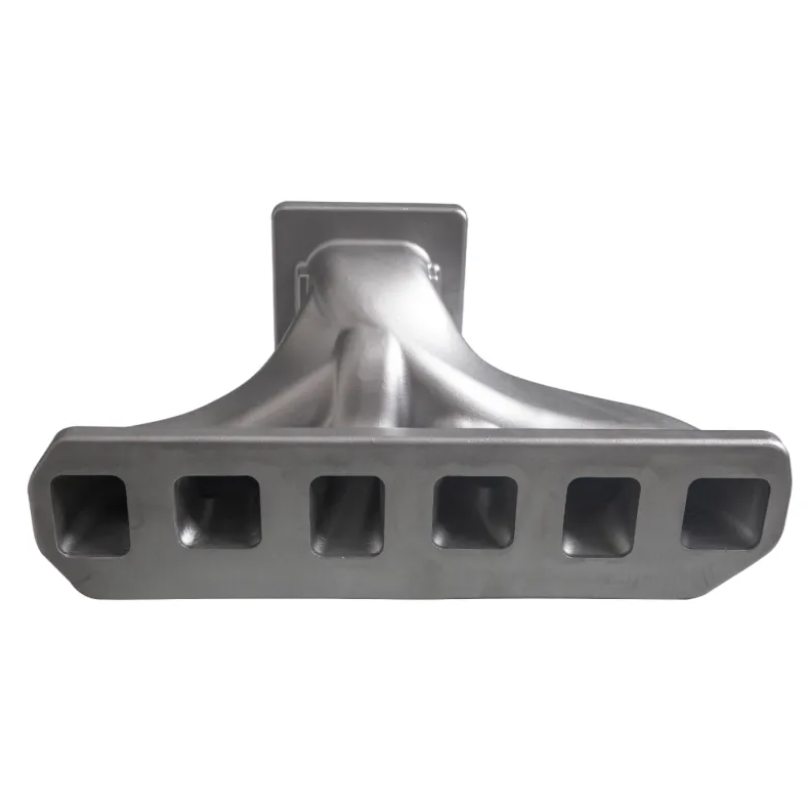
Investment casting — sometimes called lost-wax casting — earns its place in this application not because it's a premium-sounding process, but because of specific, measurable characteristics that directly address the failure modes most relevant to cooling manifolds. The process begins with a wax pattern of the part, which is coated in a ceramic shell, then melted out (hence "lost wax") to leave a cavity into which molten metal is poured. This method excels at producing complex internal geometries with relatively smooth surfaces and tight dimensional tolerances directly from the as-cast state — precisely the characteristics that matter most for manifold internal passages, where surface roughness affects flow efficiency and dimensional accuracy affects how well the manifold mates with the connectors, sensors, and cooling blocks it needs to interface with.


Intake Manifold. Product image courtesy of honyangcast.com

Dimensional Tolerance and Why It Compounds Across a Cooling Loop

A single manifold rarely operates in isolation — it sits within a cooling loop alongside pumps, cold plates, hoses or rigid tubing, sensors, and connectors, each of which has its own dimensional tolerances. When a manifold's port dimensions, thread specifications, or mounting hole positions deviate even slightly from specification, that deviation doesn't exist in isolation; it compounds with the tolerances of every other component it connects to. In a system with multiple manifolds and dozens of connection points, even small individual tolerance deviations can accumulate into assembly problems — connectors that require excessive force to seat, seals that don't compress evenly around their full circumference, or mounting bolt patterns that create stress on fittings as they're torqued into alignment. Investment casting's ability to hold tight tolerances directly from the casting process, with minimal reliance on secondary machining to correct dimensional issues, helps prevent this kind of tolerance stack-up from becoming a system-level assembly and reliability problem.

Surface Finish and Its Direct Relationship to System Efficiency

Inside a liquid cooling manifold, every bend, transition, and branch in the flow path interacts with the coolant moving through it, and the surface finish of these internal passages has a measurable effect on flow resistance. Rougher surfaces create more turbulence and frictional losses, which translate directly into higher pump power requirements to achieve the same flow rate — a real, ongoing energy cost over the system's operational life, not just a one-time manufacturing consideration. Investment casting can achieve internal surface finishes significantly smoother than sand casting or many fabrication methods, directly as a result of the smooth ceramic shell that forms the mold cavity. For systems where pump energy consumption is a meaningful factor in overall operating cost — as is increasingly the case in large-scale data center cooling deployments — the cumulative effect of smoother internal manifold passages across potentially hundreds or thousands of units can represent a genuinely significant energy saving over the system's lifetime.

Structural Integrity Under Pressure Cycling

Liquid cooling systems don't operate at a single, constant pressure — they experience pressure cycling as pumps start and stop, as valves open and close, and as thermal expansion and contraction of the coolant itself causes pressure fluctuations throughout normal operation. Over thousands of these cycles across a multi-year service life, any weak points in a manifold's structure — porosity defects, thin-wall sections, or stress concentrations at geometric transitions — become potential sites for fatigue cracking that can eventually lead to leaks, even if the manifold passed initial pressure testing when new. Investment casting, when properly controlled, produces a more uniform internal grain structure with fewer porosity defects compared to sand casting, giving the finished manifold better fatigue resistance under the kind of repeated pressure cycling that's normal for liquid cooling systems over their operational lifetime.

The Total Cost Perspective on Precision Manufacturing

Evaluating manifold casting costs purely on a per-unit basis, without considering the downstream costs of dimensional or quality issues, can lead to decisions that look favorable on a quote but prove expensive once a system is in the field. A manifold that requires extensive secondary machining to correct dimensional issues from a lower-precision casting process adds labor cost and lead time that may not be obvious when comparing initial casting quotes. A manifold with marginal internal surface finish that increases pump energy consumption by even a small percentage, multiplied across a large fleet of deployed systems over years of operation, can represent a substantial cumulative cost. And a manifold that develops a leak in the field — particularly in an application like a data center, where unplanned downtime for cooling system repairs can have significant business impact — carries costs that dwarf any initial savings from a cheaper casting process. Investment-grade precision casting, evaluated on this total cost basis, frequently represents the more economical choice even when its per-unit quote is higher than alternatives.

Ask any experienced interior designer what flooring product has most changed the residential market in the past decade, and the answer is almost universally the same: luxury vinyl plank. This product category has won over a vast global audience not through aggressive marketing but through consistent, genuine performance — delivering what it promises on appearance, durability, moisture resistance, and ease of installation in ways that competing products simply do not match at the same price point.

The Shift Away from Hardwood and Laminate

For decades, homeowners seeking a wood-look floor had two primary options: real hardwood, which delivered authentic beauty but required careful maintenance and could not tolerate moisture, or laminate flooring, which offered affordability and wood-like appearance but shared hardwood's vulnerability to water damage. Luxury vinyl plank has disrupted both categories by offering a third path: a product that looks like real hardwood with equal — in many cases superior — visual quality, is completely waterproof, requires no refinishing, and costs significantly less than solid wood to purchase and install.

The market response has been unmistakable. LVP has become the fastest-growing flooring category globally, with residential and commercial installation rates growing consistently year after year. Interior designers who once defaulted to engineered hardwood for premium residential projects now frequently specify luxury vinyl plank as their first choice — not as a compromise, but as a deliberate selection for its superior performance characteristics.

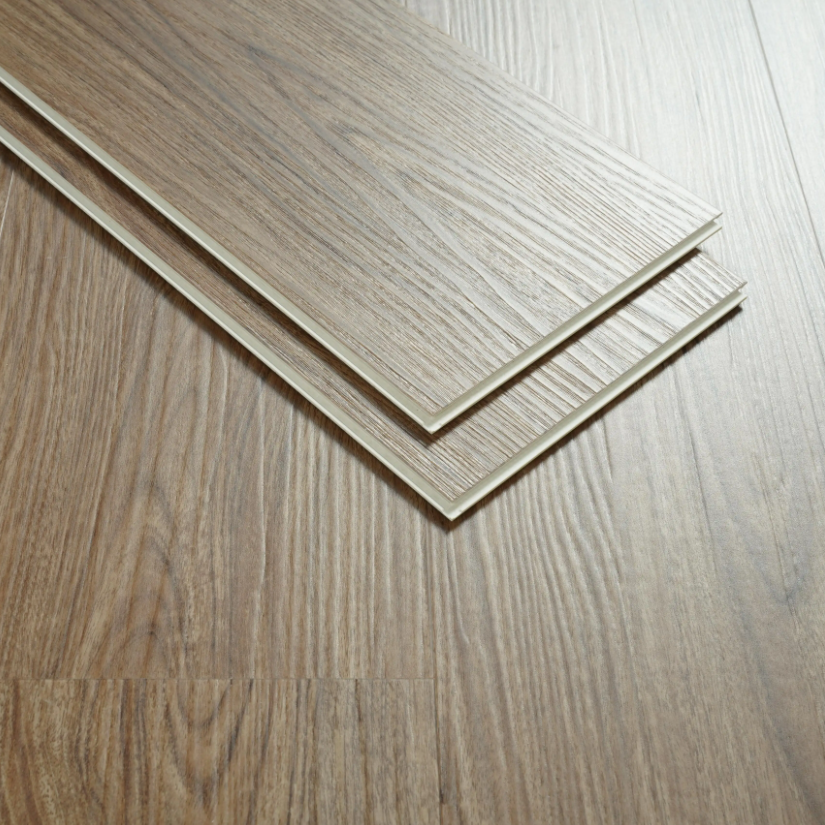
Luxury Vinyl Plank SPC 1042-1 — Stacked Plank Display Showing Wood Décor Range | China Chiping New Decor Building Materials

What Makes a Premium Luxury Vinyl Plank?

Not all luxury vinyl plank products are created equal, and understanding the specifications that determine quality will help any buyer make a more confident decision. The most critical specification is wear layer thickness — the clear PVC layer that protects the décor film from surface damage. Residential-grade products start at 0.2–0.3mm, while products suitable for demanding residential or light commercial use are specified at 0.3–0.5mm. Products for full commercial use should have wear layers of 0.5mm or above. A thicker wear layer directly translates to a longer service life and better resistance to scratching, scuffing, and surface wear.

Total plank thickness is the second key specification: thicker planks are heavier, more acoustically comfortable, and more forgiving of subfloor imperfections. Planks of 5mm to 8mm in total thickness represent the mainstream premium segment and deliver a noticeable improvement in comfort and sound performance over thinner products. The presence of a pre-attached underlayer — typically IXPE or EVA foam — adds further acoustic and thermal comfort without requiring a separate installation step.

The Supplier Advantage: Chiping New Decor

Chiping New Decor has been manufacturing premium-grade flooring products in Shandong, China, for over twenty-six years. Their luxury vinyl plank range encompasses a wide selection of SPC products in various thicknesses, wear layer options, décor families, and plank formats, all produced under ISO-certified quality management and available with full OEM and private-label service for global distributors and brand owners. Their combination of manufacturing expertise, product range breadth, and competitive wholesale pricing makes them a preferred supply partner for buyers sourcing luxury vinyl plank in large volumes for international markets.

Selecting the technical specifications for your supplement bottle is a decision with significant implications for your product's shelf life, regulatory compliance, consumer experience, and brand positioning. Too many brands treat this as a secondary decision — choosing a bottle primarily on price or availability — only to discover later that the chosen bottle is causing product degradation, failing import testing, or simply not resonating with their target consumer. This guide covers the key specifications you need to evaluate to make the right choice.

Capacity and Serving Count Alignment

The starting point for any supplement bottle specification is matching the bottle's capacity to the product's intended serving count and serving size. A standard 60-count capsule bottle, for example, requires a capacity that accommodates 60 capsules of the specified size with sufficient headspace to allow for filling, desiccant insertion, and cotton filler. Too small a bottle creates packing difficulties and a poor unboxing experience; too large a bottle makes the product look underfilled and communicates poor value to the consumer.


ZLS Multi-Capacity Gold Plating PET Vitamin Container Supplement Bottle with Screw Cap | Taizhou Zonglvshu Packing Co., Ltd.

Common supplement bottle sizes range from 60cc to 300cc or larger for capsule and tablet products, with larger capacities used for protein powder tubs, bulk vitamin products, and multi-serving formats. Working with your supplement contract manufacturer and packaging supplier simultaneously to define the appropriate bottle size for each product in your range ensures dimensional compatibility from the outset and prevents the costly corrections that result from mismatched component specifications.

Closure Compatibility and Child-Resistance Requirements

The closure — cap — specified for a supplement bottle must be compatible with the bottle's neck finish (the thread type and diameter at the top of the bottle). Supplement bottles are typically manufactured with standardised neck finishes — commonly 38-400, 43-400, or 53-400 — and the corresponding closure must match the specific thread dimensions to ensure a secure, leak-proof seal. For supplement products that are classified as dietary supplements or over-the-counter health products, child-resistant closures are often mandatory under the regulations of the target market — particularly in the United States (PPPA) and European markets where product harm prevention regulations apply.

Surface Finish and Labelability

The surface of a supplement bottle must be compatible with the labelling method used for your product — pressure-sensitive label, heat-shrink sleeve, or direct print. Standard PET and HDPE bottle surfaces are well-suited to pressure-sensitive labels, but the specific surface energy and curvature of the bottle must be considered when selecting label material and adhesive to ensure the label applies flat, adheres securely, and remains intact throughout the product's shelf life and retail handling. Palmtreepack's range of supplement bottles includes standard clear and white options alongside premium frosted, gold electroplating, and matte finish variants, all designed with consistent surface quality that supports reliable label application and an excellent retail presentation.

Getting your food bag right is one of the most impactful decisions any food brand can make. The right packaging protects your product's freshness and quality, makes your brand instantly recognisable on a crowded retail shelf, meets the legal and regulatory requirements of your target markets, and provides the practical features — resealable zippers, tear notches, clear windows — that modern consumers have come to expect as standard. This guide will help you navigate the selection process confidently and intelligently.

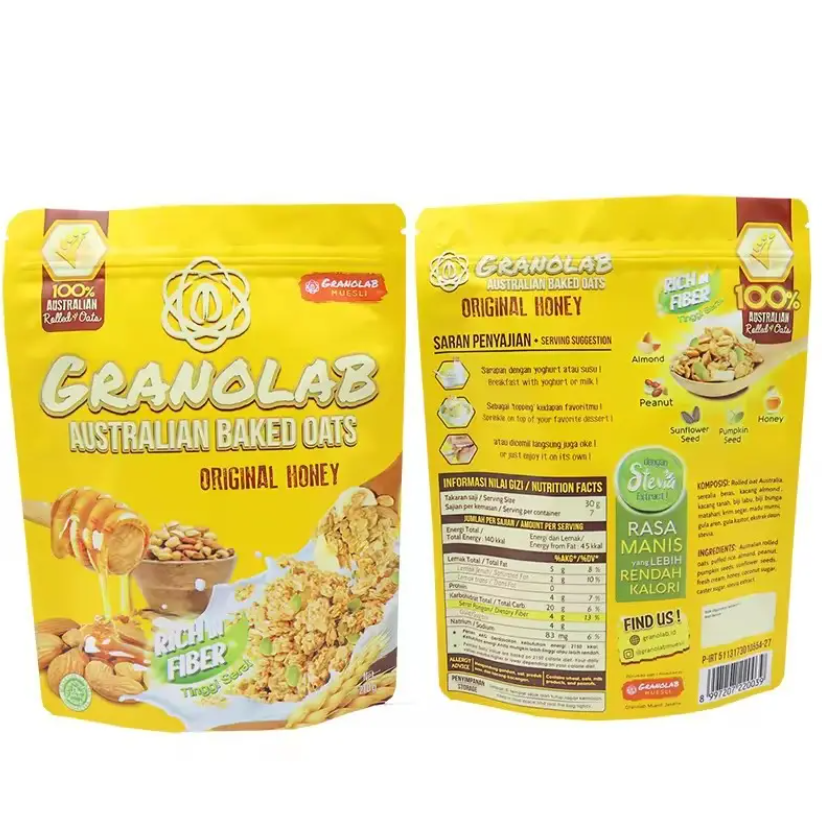
Custom PET/VMPET/PE Stand-Up Food Bag for Granola & Snacks — High-Barrier Laminate | Weihai Haodong Packing Co., Ltd.

Understanding Your Product's Packaging Requirements

Before evaluating specific packaging formats, begin by clearly defining what your product needs from its packaging. Consider the product's shelf life target — how long must the packaging maintain freshness from production to consumption? Consider the product's sensitivity to oxygen, moisture, and light. Consider how the product will be sold — retail, foodservice, e-commerce, or bulk — and what physical stresses it will experience in the supply chain. These parameters collectively define the technical specification that your food bag must meet.

High-fat products such as nuts, seeds, and granola require excellent oxygen barrier performance to prevent rancidity. Fine powders such as protein powder, flour, and spices need moisture barrier materials that prevent caking and clumping. Frozen and chilled products need materials that maintain their integrity and seal performance at low temperatures. Products sold primarily through e-commerce need puncture-resistant structures that can survive the stresses of parcel shipping without compromising the product inside. Each of these requirements translates to a specific material laminate selection and package design.

The Most Common Food Bag Formats and Their Best Uses

The stand-up pouch (doypack) is the most popular flexible food bag format globally, valued for its self-standing shelf presence, large printable surface area, resealability, and versatility across product categories. Flat-bottom pouches offer even greater shelf stability and a wide, prominent front panel — increasingly popular for premium snack and coffee brands. Pillow bags are the most economical option for high-volume products sold on cost efficiency — chips, confectionery, and bulk snacks all typically use this format. Gusseted bags expand to accommodate volume and are widely used for dry pet food, grain products, and bulk packaging formats.

Print Quality and Brand Presentation

Modern food bag printing technology — primarily rotogravure and digital printing — delivers photographic-quality imagery, precise colour matching, and a broad range of decorative finishes that make packaging genuinely beautiful. Matte lamination creates a premium, tactile quality associated with artisan and health-focused brands. Gloss finishes create vibrancy and visual impact suited to snack and confectionery categories. Metallic inks and foil detailing add a premium finish that resonates with gift and luxury food markets. Spot UV coating creates a contrasting texture between the UV-coated and uncoated areas of the design, adding visual sophistication and a distinctive tactile quality.

Weihai Haodong's in-house design support team works with clients to optimise both the technical and aesthetic dimensions of their food bag designs, ensuring that print quality, material selection, and structural format are all aligned to the brand's positioning, the product's requirements, and the target retail environment's standards. As a BRC-certified manufacturer with 24+ production lines and global export experience since 2001, Haodong provides the quality consistency, production scale, and customisation flexibility that every serious food brand needs from their packaging partner.

Beyond the basic question of whether an umbrella base is heavy enough to do its job, there is a second layer of consideration that often gets overlooked: how well the base actually fits into the broader layout and aesthetic of the outdoor space it will occupy. A base that is functionally adequate but visually clunky, or one that sits awkwardly with the table and seating arrangement around it, can undermine the overall look of an otherwise carefully planned patio or garden area — and conversely, a thoughtfully chosen base can disappear into the background, doing its job without drawing attention to itself.

The first decision point in matching a base to a patio setup is whether the umbrella will be a centre-pole design, rising through a hole in the middle of a dining or coffee table, or a side-pole or cantilever design, where the pole sits to the side of the seating area and the canopy extends outward on an arm. These two configurations have very different base requirements: a centre-pole umbrella's base sits beneath the table, often partially or fully hidden from view, meaning its visual appearance matters less than its footprint and whether it fits within the table's base structure. A cantilever umbrella, by contrast, has its base fully exposed beside the seating area, making both its appearance and its footprint significant factors in the overall layout.


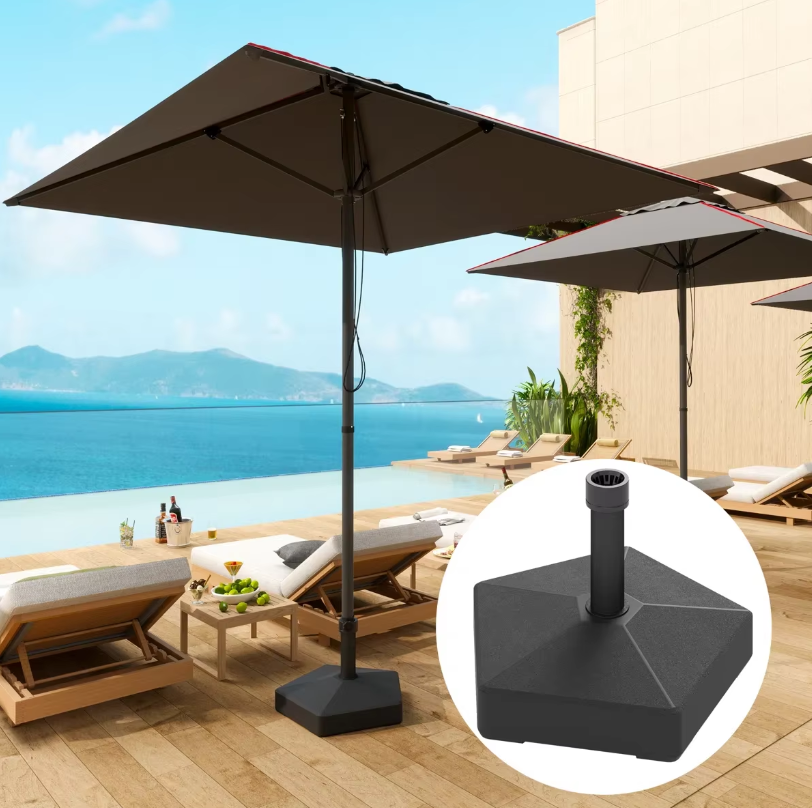
Modern Design PE Patio Umbrella Base Outdoor Furniture Use-Prohibited with Shipping for Courtyard. Product image courtesy of zj-furniture.com

Centre-Pole Setups: Footprint and Table Compatibility

For centre-pole umbrella arrangements, the umbrella base typically needs to fit either within or beneath the base of the dining or coffee table that the umbrella passes through, which means the dimensions of the base — both its diameter and its height — need to be checked against the available clearance under the specific table being used. Some tables are designed with this in mind, featuring a base structure with sufficient clearance for a standalone umbrella base to sit underneath, while others rely on the table's own base providing sufficient ballast, in which case a separate heavy umbrella base may not be needed at all, and a simple stabilising collar at the table surface may suffice instead. Measuring the available space beneath a table before purchasing a separate base avoids the frustration of bringing home a base that simply does not fit the intended location.

Cantilever Setups: Visual Presence and Placement Flexibility

Cantilever or offset umbrellas have grown in popularity precisely because they free up the space directly beneath the canopy for furniture, without a pole interrupting the seating area — but this design places the entire stabilising base in plain view, usually as a cross-shaped or rectangular weighted frame at one side of the seating arrangement. Because this base is visible, its finish and form become part of the overall aesthetic of the space, and bases finished in colours or materials that complement the rest of the outdoor furniture collection help the whole arrangement feel cohesive rather than like mismatched pieces assembled from different sources. The base's footprint also needs to be accounted for in traffic flow around the seating area, since cantilever bases tend to be larger than centre-pole bases for an equivalent level of stability, given the greater leverage the offset design creates.

Coordinating Finishes Across the Outdoor Furniture Collection

One detail that elevates an outdoor space from merely functional to genuinely well-designed is the coordination of finishes across all the metal components visible in the seating area — table frames, chair frames, and umbrella bases all benefit from a degree of visual consistency, whether that means matching finishes exactly or choosing complementary tones that read as part of a considered palette rather than a random assortment. For buyers furnishing an outdoor space from scratch, considering the umbrella base as part of the same selection process as the table and seating, rather than as a separate afterthought purchase, makes it far easier to achieve this kind of cohesion — and a base chosen with the same attention to finish and form as the rest of the collection will feel like an integral part of the space rather than a purely utilitarian addition.

The production of high-quality electrical transformers — whether for power distribution, industrial electronics, audio amplification, or medical equipment — depends fundamentally on the consistency and accuracy of the wire winding process that creates the coils at the transformer's core. A precision transformer winding machine transforms this process from a skilled manual operation with inherent human variability into a controlled, programmable automated process where winding specifications are defined digitally, executed consistently, and verified through built-in measurement systems. The quality improvement that this automation delivers — in terms of coil-to-coil consistency, interlayer insulation integrity, fill factor optimisation, and production speed — creates measurable improvements in transformer performance, manufacturing yield, and cost efficiency that justify the capital investment in modern winding equipment even at modest production volumes.

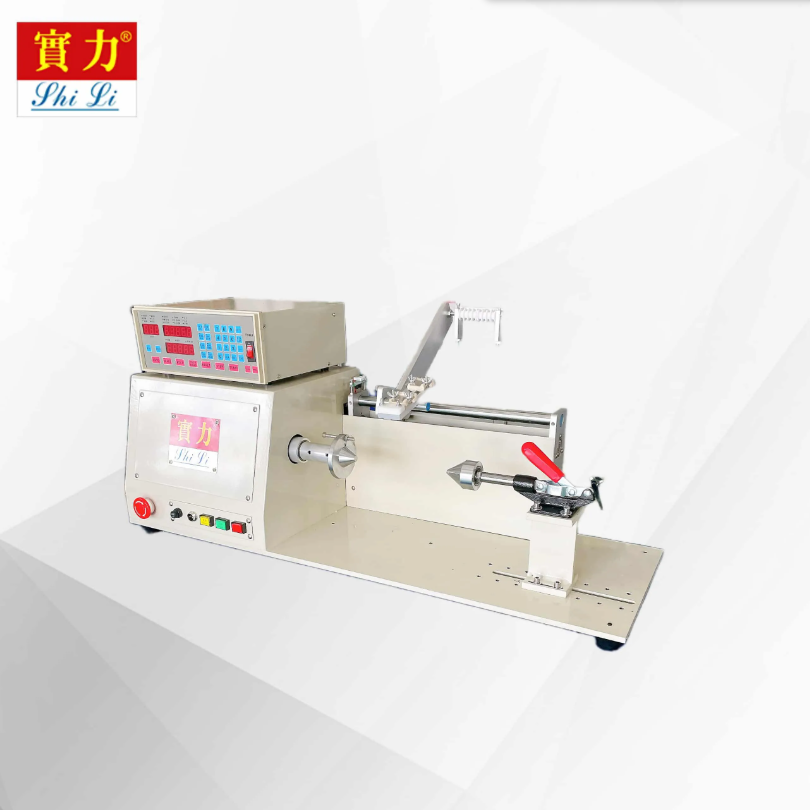
Zhongshan Shili's SHL-2802 single spindle wire winding machine exemplifies the quality and functionality of their core transformer winding product line — a programmable CNC winding system that enables precise programming of winding parameters including wire pitch, layer count, turn count, winding speed, and tension profile through a user-friendly control interface. The stored programme capability of the machine enables the laboratory to build a library of winding programmes for their standard transformer designs, recalling and executing them reliably on every production run without the variability that manual setting and re-setting introduces between production batches. This programme recall capability is particularly valuable for manufacturers with diverse transformer product lines producing each design in medium volumes — the ability to switch between designs by programme recall rather than by skilled manual set-up reduces changeover time, enables less experienced operators to produce to specification, and eliminates the production quality variation between operators that characterises manual winding operations.

Zhongshan Shili SHL-2802 Single Spindle Wire Winding Machine — programmable CNC transformer winding machine for consistent, accurate transformer coil production with stored programme recall capability.

Wire Tension Management in Transformer Winding

Wire tension during winding is one of the most important and most technically demanding process variables in transformer coil production. Insufficient tension allows wire to sag between turns, producing irregular winding pitch, inter-turn shorts from wire crossings, and reduced fill factor that wastes bobbin window space and increases coil resistance above design specification. Excessive tension causes wire stretching that increases resistance through cross-section reduction, creates residual stresses that can cause conductor cracking in service, and may damage fine wire insulation at sharp corners and edges. The optimal tension profile varies with wire diameter, winding speed, and layer position within the coil — inner layers of a multi-layer winding require lower tension to avoid compressing and distorting the bobbin core, while outer layers benefit from slightly higher tension to achieve tight, consistent packing. Shili's transformer winding machines incorporate programmable tension control systems that automatically manage tension through the winding cycle, maintaining the material-specific and position-specific tension values that the winding programme defines — producing consistently wound coils whose electrical performance matches the design specification reliably across every production unit.

Integration of the Transformer Winding Machine with Production Quality Systems

Modern transformer production quality management requires that the winding process is not only controlled but documented — with per-unit production records that enable traceability of coil winding parameters for quality audit, warranty claim investigation, and continuous improvement analysis. Shili's advanced transformer winding machine models with data logging capability produce per-coil production records that capture the actual winding parameters — turns count, tension profile, winding speed — for each completed coil, enabling quality managers to verify that every unit was produced within specification rather than relying on statistical sampling alone. This documentation capability supports ISO quality management system compliance, enables rapid root-cause analysis when field failures are investigated, and provides the production data needed for the continuous improvement of winding parameters that optimises coil performance over successive design iterations. For transformer manufacturers supplying to demanding industrial or medical customers who require documented production quality evidence, this traceability capability can be a prerequisite for supplier qualification that Shili's data-capable winding machines are equipped to meet.

Long-form listening sessions with the BRZHIFI C-200 Preamplifier reveal a component that rewards patience and system synergy with a level of musical engagement that belies its price. In a market crowded with preamplifiers making grandiose claims about audio performance, the C-200 is notable for the modesty of its visual presentation — a clean, purposeful design that prioritizes what matters inside the chassis — and for the way it quietly but consistently elevates every source fed through its inputs.

The first impression on hooking up the C-200 in a well-configured reference system is one of profound quietness. The noise floor is extraordinarily low — so low that with efficient loudspeakers and a short listening distance, you can hear the system simply doing nothing: no hiss, no hum, no residual transformer buzz. This is the foundation from which everything else is built, and it is the first indication that the engineering inside this chassis is genuinely serious. A quiet preamp does not guarantee a great preamp — but a noisy one will never be a great one, regardless of its other attributes.

Sonic Character Across Music Genres

With high-resolution digital sources (24-bit/96 kHz and above, fed through a quality DAC), the C-200 demonstrates a particular gift for spatial information. Stereo recordings through this preamplifier have a dimensional quality — a sense of depth behind the plane of the loudspeakers, precise left-right imaging, and a believable sense of acoustic space around recorded instruments — that lower-grade preamplifiers simply cannot reproduce. This spatial fidelity is a direct consequence of the Class A topology's low distortion and the careful matching of the differential input stage, which maintains the inter-channel phase relationships responsible for the holographic imaging that draws audiophiles into the music.

On classical orchestral recordings, the C-200 is particularly impressive. The dynamic range from the quietest pianissimo passages to full orchestral fortissimo climaxes is reproduced with a sense of unrestricted authority that suggests the circuit is nowhere near its headroom limit at normal listening levels. This dynamic headroom — the subjective sense that the amplifier could handle whatever comes at it without straining — is one of the most musically satisfying attributes any component can possess, and it is directly related to the Class A operating mode and the generously dimensioned power supply of the C-200.

The C-200's input and output impedances are designed for compatibility with the wide range of source components and power amplifiers it is likely to be partnered with. Input impedance is high enough to present a negligible load to even the most output-sensitive DAC or CD player, while output impedance is low enough to drive any reasonable power amplifier input without high-frequency rolloff or dynamic impedance effects. This broad compatibility means the C-200 integrates seamlessly into virtually any existing Hi-Fi system without the impedance-matching anxieties that affect some high-end preamplifier designs.

The gain structure of the C-200 is calibrated to work optimally with power amplifiers of typical sensitivity. Users pairing the C-200 with very high-sensitivity amplifiers may find that usable volume range is limited to the lower portion of the volume control travel. In such pairings, the use of the C-200's remote control system makes fine volume adjustment more practical, as remote-controlled stepping tends to have finer resolution than manual knob rotation at low levels. For the vast majority of amplifier pairings, however, the C-200's gain staging is exemplary — offering wide, useful volume range with excellent resolution at every setting.

Long-Term Ownership Perspective

A preamplifier is one of the longest-lived components in any audiophile system. Unlike DACs — which benefit from the continuous improvement in converter chip technology — or speakers — which may be upgraded as room acoustics change or listening preferences evolve — a great preamplifier can anchor a system for a decade or more, serving through multiple rounds of source and amplifier upgrades without becoming the limiting factor in system performance. The C-200's build quality and circuit architecture suggest it is designed with exactly this long-term role in mind: substantial enough to outlast most components it will be partnered with, and transparent enough to reveal the improvements made elsewhere in the chain rather than obscuring them.

Conclusion

The BRZHIFI C-200 Preamplifier is a component that deserves to be evaluated alongside reference-class units costing significantly more. Its Class A engineering, low noise floor, spatial fidelity, and dynamic authority make it a musically compelling and technically honest product that will satisfy serious audiophiles who demand performance over prestige. In a listening room paired with high-quality sources and amplification, the C-200 has the capability to transform recorded music into something genuinely moving — which, ultimately, is the only measure of a preamplifier that truly matters.

Not all suitcase luggage is created equal, and the features that separate genuinely useful designs from marketing gimmicks become clear after a few real-world journeys. Understanding which specifications deliver tangible benefits — and which are superficial additions that add cost without improving usability — helps travelers invest wisely in luggage they'll rely on for years.The challenge is that almost every suitcase looks impressive in product photography. Real-world evaluation — handling the case, testing the wheels and handle, examining seam and zipper quality, and reviewing independent durability testing — reveals the true quality gap between products at similar price points.

Premium Suitcase Luggage Detail — Ladilatu / Jiaxing Linzhihang

Shell Material and Construction Quality

Virgin polycarbonate offers the best impact resistance and weight efficiency of any plastic shell material. PC shells flex on impact to absorb energy before springing back without cracking. ABS+PC blends offer a cost-performance middle ground widely used in mid-range luggage. Pure aluminum delivers ultimate rigidity and security but adds meaningful weight. Construction quality is visible in the details: frame alignment at closure, zipper groove evenness, shell flatness when closed, and corner reinforcement thickness. Reputable manufacturers test panels for dent resistance, drop impact, and crush resistance against standardised methods.

Expandable Compartments: Practical Packing Flexibility

Many modern suitcase designs incorporate zippered expansion panels that increase capacity by two to four centimetres when fully expanded. This provides genuine packing flexibility — allowing the case to be compactly packed for the outward journey and expanded for the return when souvenir shopping has filled the available space. However, expansion increases external dimensions, which can push a borderline cabin bag over airline size limits. Always verify expanded dimensions against applicable airline policies before relying on this feature with carry-on cases.

Interior Organisation Systems

Compression straps with buckle closures prevent contents from shifting during transit. Zippered mesh pockets on the lid half provide rapid access to accessories and toiletries. Removable packing cubes or zippered dividers create separate clothing and accessory zones. For business travelers, dedicated laptop sleeves, garment sections, or quick-access front-opening compartments provide meaningful convenience on frequent trips where efficiency at hotel check-in and meeting-room access matters.

Durability Under Real-World Conditions

Premium suitcase luggage should withstand years of airline handling, which subjects cases to impacts, pressure from co-stacked bags, vibration on conveyor belts, and exposure to rain and humidity. Look for reinforced corner guards, double-stitched fabric liners, and wheel housings integrated into the shell structure rather than bolted on as afterthoughts. Warranties of three to five years or more from the manufacturer signal genuine confidence in product durability — a strong positive indicator when comparing options across the full quality spectrum available in the market today.

The suitcase luggage purchasing decision rewards informed buyers who take time to understand technical differences between competing products and evaluate them against their specific travel requirements. Matching shell material to your fragile-item protection needs, wheel system quality to the frequency and distance of your airport transit, and interior organisation features to your actual packing habits produces a purchase decision that serves you precisely rather than generically. Combined with care during use and proactive maintenance of the wheel and handle systems, a well-chosen suitcase from a quality manufacturer will be a reliable and satisfying travel companion across many years and hundreds of journeys before any question of replacement realistically arises.

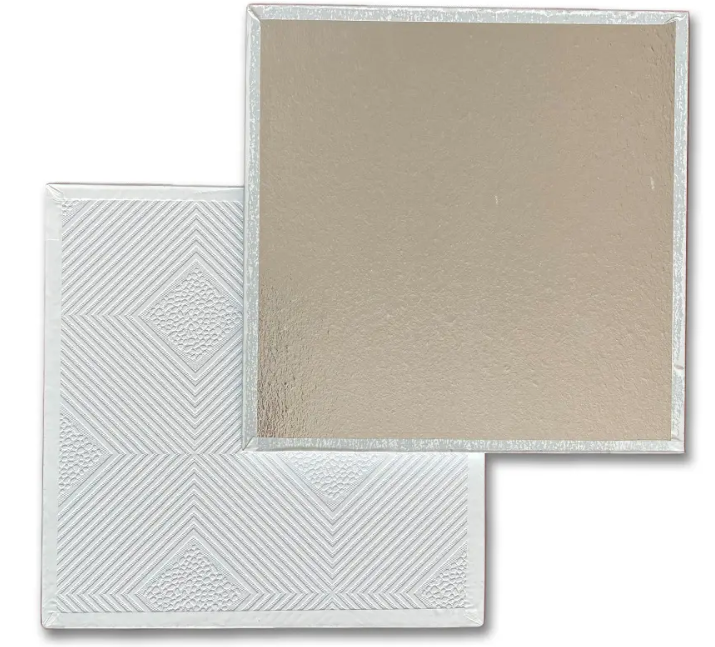
What Is Calcium Silicate Board and Why Is It Important?

Among the many high-performance building materials available to modern architects and construction professionals, few combine as many critical performance characteristics in a single, cost-effective product as calcium silicate board. Manufactured through a process of combining siliceous materials, calcareous compounds, and reinforcing mineral or cellulosic fibres and then subjecting the mixture to high-pressure steam curing — a process known as autoclaving — calcium silicate board develops a dense, stable crystalline microstructure that gives it properties far exceeding those of conventional gypsum or fibre cement alternatives. The autoclaving process creates a material that is inherently fire-resistant, dimensionally stable under temperature change, moisture-resistant, and biologically inert — making it suitable for a vast range of construction environments that would rapidly degrade conventional building board products. Understanding these properties and how they translate into real-world application advantages is essential for any specifier, contractor, or building owner seeking to make an informed material selection decision.

Exceptional Fire Resistance for Critical Applications

Fire performance is the property most frequently cited by specifiers as the primary driver for selecting calcium silicate board over alternative products, and the material's fire credentials are genuinely exceptional. Calcium silicate board achieves a Class A1 non-combustible classification under European Standard EN 13501-1, meaning it contributes no fuel to a fire, does not spread flames, and produces no smoke or toxic gases when exposed directly to fire. Unlike gypsum board, which releases steam from its chemically bound water content when exposed to heat — a process that eventually exhausts its fire resistance as the water is depleted — calcium silicate board maintains its structural integrity indefinitely under fire exposure because its fire resistance is a function of its crystalline structure rather than a depletion-based chemical reaction. This sustained, non-depletable fire resistance makes calcium silicate board the specification standard for fire-rated ceilings, protective column encasements, and fire barrier assemblies in commercial, industrial, and infrastructure projects where occupant life safety and property protection are paramount.

Moisture and Mould Resistance in Demanding Environments

The vulnerability of conventional building boards to moisture is one of the most persistent and costly problems in construction maintenance, and calcium silicate board addresses this problem comprehensively through its fundamental material chemistry. Unlike gypsum — which absorbs water readily, swells, loses structural integrity when wet, and provides an ideal growing medium for mould and mildew — calcium silicate board is inherently hydrophobic at the microstructural level. Its crystalline matrix does not readily absorb water, meaning the board maintains its dimensional stability, surface integrity, and structural strength even after prolonged exposure to high humidity or intermittent water contact. This moisture immunity makes calcium silicate board the specification of choice for building applications that would rapidly compromise conventional products: bathroom and wet room walls and ceilings, commercial kitchen fit-outs, swimming pool enclosures, hospital sterilisation rooms, covered carpark soffits, and any coastal or tropical environment where high ambient humidity is a persistent condition throughout the building's operational life.

Structural Strength and Long-Term Dimensional Stability

The autoclaved manufacturing process that defines calcium silicate board production does not merely deliver fire and moisture resistance — it also creates a compressive strength and dimensional rigidity that significantly exceeds the mechanical performance of gypsum-based building boards. Standard calcium silicate boards achieve modulus of rupture values that are typically two to three times higher than equivalent-thickness gypsum board, meaning they can span greater unsupported distances, support higher distributed loads, and resist the impact damage that is inevitable in high-traffic commercial environments. Long-term dimensional stability is another critical mechanical advantage: calcium silicate board does not creep, warp, or bow over time under sustained load or thermal cycling, which means ceilings and partition walls built with the material maintain their precision geometry and tight jointing for the full operational life of the building without the cracking, sagging, or bowing that commonly afflicts gypsum-board installations after several years of service.

Applications Across Sectors and Environmental Credentials

The combination of fire resistance, moisture resistance, structural strength, and dimensional stability that calcium silicate board offers makes it suitable for an exceptionally broad range of construction applications across virtually every building sector. In commercial construction, it is specified for fire-rated suspended ceilings, non-loadbearing fire-rated partitions, and service-duct linings in office buildings, retail centres, and hotels. In industrial settings, it is used for factory wall and ceiling linings, equipment enclosures, and structural fire protection systems. Healthcare facilities rely on it for clean-room partitions, hospital corridor ceilings, and operating theatre walls where hygiene, fire safety, and moisture resistance must all be maintained simultaneously. From an environmental perspective, modern calcium silicate board production uses primarily natural mineral raw materials, generates minimal manufacturing waste, contains no asbestos or formaldehyde, and produces boards that are fully recyclable at the end of their operational life — making it an appropriate choice for projects seeking LEED, BREEAM, or other green building certification credits.

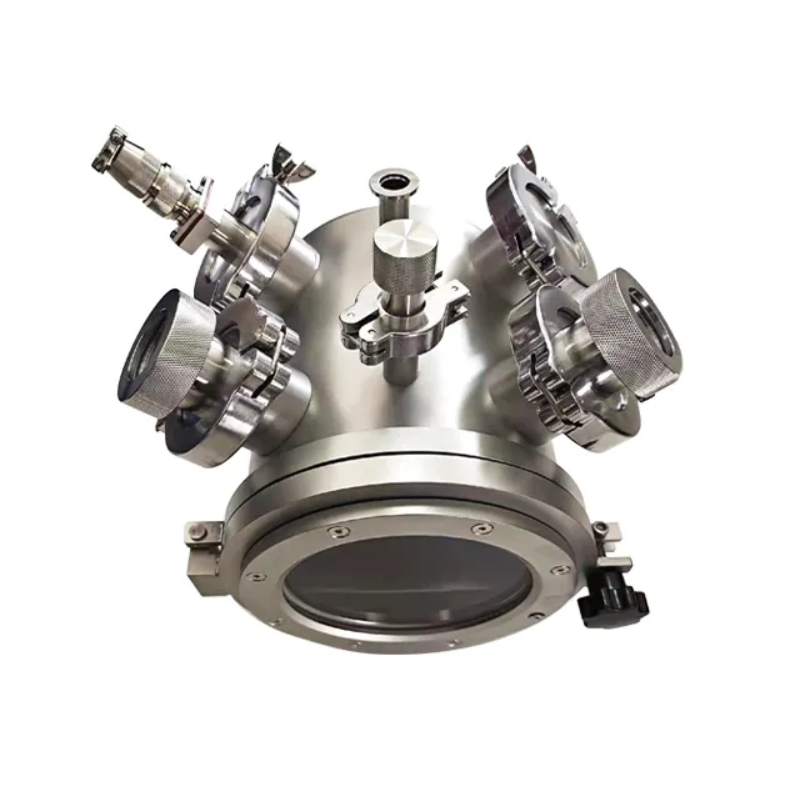
Achieving and sustaining an ultra-high vacuum environment — defined as pressures below ten to the minus nine millibar — is one of the most technically demanding challenges in precision engineering and scientific instrumentation, and the design and quality of the vacuum chamber that hosts this environment is the single most important determinant of whether the target pressure can be reached and maintained reliably throughout the system's operational life. Cylindrical Chambers are the dominant choice for UHV applications precisely because their geometric and material characteristics are the most compatible with the unique set of technical requirements that ultra-high vacuum imposes on the chamber structure — requirements relating to outgassing rate, thermal cycling capability, leak integrity, magnetic compatibility, and dimensional stability that no other chamber geometry addresses as comprehensively within the constraints of practical and cost-effective manufacturing.

Outgassing — the slow release of gas molecules from the surfaces and bulk material of the chamber walls under vacuum conditions — is the primary factor limiting the ultimate vacuum achievable in any sealed chamber system, and it is the material and surface preparation decisions made during the design and manufacturing of the cylindrical chamber that determine this critical performance parameter. Stainless steel, as the preferred construction material for UHV cylindrical chambers, has an inherently lower bulk outgassing rate than most engineering metals due to its oxide surface layer and the low diffusivity of hydrogen — the dominant outgassing species in stainless steel — through the material's austenitic crystal structure. Electropolishing the interior surface reduces the surface area available for gas molecule adsorption by removing the microscopic peaks and valleys of the machined finish, reducing the water vapour and hydrocarbon reservoir that dominates outgassing at room temperature. Bakeout — heating the assembled chamber to 150 to 250 degrees Celsius while pumping — accelerates the desorption of surface gases by orders of magnitude, allowing the chamber to reach its base pressure days or weeks faster than an unbaked system.

Cylindrical vacuum Chambers

Leak Testing and Quality Assurance for UHV Service

The leak-tightness of a UHV cylindrical chamber is verified through helium mass spectrometer leak testing — the most sensitive and definitive leak detection technique available for vacuum components — which probes every weld seam, flange face, and feedthrough penetration for the presence of inward gas flow at the ultra-low rates that would be significant at UHV operating pressures. The industry standard leak rate specification for UHV chambers is typically 1.3 times ten to the minus eleven Pascal litres per second, which represents a gas flow so small as to be completely undetectable by any technique other than helium mass spectrometry. Achieving this specification consistently across every chamber produced requires welding procedures specifically qualified for vacuum service, post-weld surface preparation protocols that remove weld-related contamination and oxide formation from the interior weld bead area, and a rigorous incoming inspection of all flanges and fittings to verify dimensional conformance before assembly into the chamber structure.

Integration with Pumping Systems and Analytical Instruments

The performance of a UHV cylindrical chamber in service is inseparable from the performance of the pumping system and the analytical instruments connected to it, making the design of the chamber's port configuration and the selection of its connections to external systems as important as the chamber's own structural and surface qualities. The chamber's largest port — typically the main pump-down port — is sized to accept the largest practical turbomolecular pump or ion pump that the system design can accommodate, as the pumping speed at the chamber determines the rate at which outgassed molecules are removed and the ultimate base pressure achievable. Ion pumps, which provide contamination-free pumping at UHV pressures without any vibration-generating mechanical components, are preferred for the most sensitive surface science and quantum device applications, while turbomolecular pumps backed by dry scroll pumps offer faster pump-down from atmospheric pressure and are standard in most surface analysis, deposition, and accelerator beam-line chamber applications.

Maintenance, Venting, and Long-Term Performance Management

Maintaining the UHV performance of a cylindrical chamber over its operational lifetime requires disciplined procedures for every instance where the vacuum system must be opened for instrument modification, component replacement, or maintenance activities. Each venting and reintroduction to atmosphere event introduces water vapour and other atmospheric gases that re-adsorb on the chamber's interior surfaces and must be removed by bakeout before UHV conditions can be restored. Dry nitrogen venting rather than atmospheric air venting reduces the quantity of water vapour introduced during a venting event by orders of magnitude, dramatically shortening the subsequent bakeout time required to restore base pressure. All components introduced into the chamber interior during maintenance must be cleaned to UHV standards — solvent cleaned, vacuum fired where appropriate, and handled exclusively with clean-room gloves to prevent surface contamination from skin oils and atmospheric particles that would degrade the chamber's outgassing performance and delay recovery to the target base pressure after reassembly and restart.

I BUILT MY SITE FOR FREE USING